WITHOUT CONSCIENCE
Book 1 of the North Yorkshire MIT Trilogy

When two decapitated bodies are discovered in the garden of a sleepy village in North Yorkshire, Detective Chief Inspector Victoria Adams begins an investigation to track down their killer. Little does she realise that she is about to uncover her worst nightmare in the shape of a predator of the most depraved kind. One who is without conscience, and one who not only gets his kicks from the torture and killing of vulnerable women but is driven by his all-consuming desire for revenge on Victoria’s boss, Superintendent Sean O’Neill, who heads up the North Yorkshire Major Incident Team.
Along with her partner, pathologist Dr Miriam DeSilva, and the rest of the MIT, Victoria attempts to track down the killer (or killers) of the bodies in the garden and those responsible for the more recent deaths of three young women. The perpetrator has managed to evade capture for decades through what he believes to be a fool proof strategy.
But for how much longer can he evade capture and be allowed to kill freely?
PAPERBACK
£9.99
A Genuinely Gripping Thriller
One of the things I love about the crime genre of literature is the way that, when written well, you are drawn into the world of the story even though you know that in reality the events and coincidences are totally implausible… David Kirk achieves this with finesse. I was quickly hooked. The criminal character in this novel is cleverly developed so that he is genuinely horrifying and the police officers are quirky and likeable. The plot develops in a conventional way but the interesting and original twists and turns means this story is not just another generic rehash.
The skilful use of dramatic irony makes the book hard to put down. The writer’s in-depth understanding of police procedure and criminal psychology adds a level of believability. For those readers that know the particular areas of York and North Yorkshire where the story takes place it makes the tale come to life all the more. I’m looking forward to the next part of the trilogy.
– David Rees
“Ok guys, you should give this a read, first in a Trilogy from David Kirk, I’ve left it three days to critique it, to try and be subjective, but it’s brilliant.”
– Barney Morris, Manchester.
“A haunting and gripping tale about hatred and revenge permeated by the integrity, friendship, and comradery of the North Yorkshire MIT team. A brilliant balance that keeps you hooked from beginning to end.”
– Ceri Savage, Kidderminster
“Just finished it!! He better get the second one out soon after that cliff-hanger.”
– Abbie Appleby, Newcastle.
A mindless psychopath or revenge-seeking genius?
Either way, young women in York are being killed
at his hands.
LOCATIONS
The Blue Bell
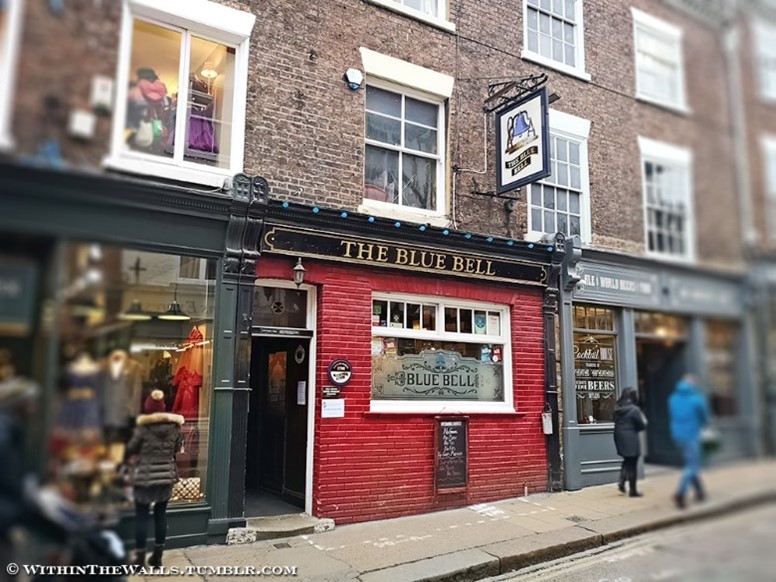
Superintendent Sean O’Neill and his son Matt rarely managed any downtime these days. Their work and lifestyle simply didn’t accommodate any or much father-son bonding, and on the occasions when it did, one of York’s oldest pubs was usually on the agenda.
‘Will you have another one, Dad?’
‘Aye, go on then. I’ll have a Guinness this time. Just a half though. I’m supposed to be driving.’
Matt stood up and moved to the bar. He was easily the tallest person in the room standing around six foot five, maybe a bit more. His height drew attention, sometimes unwanted, but it rarely bothered him. He smiled at the barmaid and she gave him one back accompanied by a coy blush and a further flirting smile as she handed him his change. He watched her as she pulled his pint and the half for his dad, and as she pushed them across the bar towards him, she gave yet another cheeky smile that he acknowledged with one of his own. Matt O’Neill was a good looking guy in his mid-twenties. He was fit, well-muscled, filled his tailored suit well, without it being too tight, and he could flirt for Britain. As he returned with the drinks, his dad was scrutinising his phone and mumbling, ‘Oh no, shit, shit, shit.’
A lot of what you see and experience in The Blue Bell today is due to what we affectionately call ‘The Robinson Dynasty’. In the January of 1903 George and Annie Robinson took on the pub and created the House Rules you can still see today. Annie gave birth to a baby girl who they named Edith in the December of the same year. The pub was given a very trendy Edwardian make-over, the glazed bricks were added and the front door was moved to its current position on Fossgate. They ran the pub through World War One, the Spanish Flu, the depression of the thirties and World War Two. They celebrated their golden wedding anniversary in 1947 before George sadly passed away a year later.
Annie then took over the running of the pub and celebrated her 85th birthday here in 1962. When she passed away in 1963 the lease transferred to their daughter Edith who by now was 60 herself. Edith (or Mrs Pinder as she preferred to be known) kept her mother and father’s rules in place and wasn’t one for change. She ran The Blue Bell with the uncompromising attitude learnt from her parents until 1992 when she passed away after 89 years of being at the pub. In that time she saw 17 US Presidents, 18 British Prime Ministers and five monarchs come and go – all whilst nothing in her treasured Blue Bell changed one bit.
The Yorkshire Arboretum
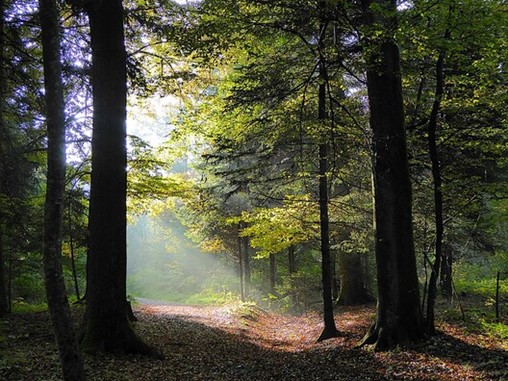
Derek noticed that the ground at the base of a large Scots pine had been built up in a mound. He walked over to have a closer look.
Someone’s been digging here. And quite recently, he thought. Who gave permission to go digging around the base of any trees? They could have done serious damage to the bloody roots.
He didn’t make much more of it at first and made his way back to his quad bike. Then he glanced back. No, he could not imagine why anyone would want to dig such an expanse of earth for no real reason. So, he decided to put his tea down and have a closer look.
It was clear that some individual had gone to a great deal of bother to hide their unwarranted cultivations. The grass looked like it had been taken up in cut sods over an area of about six square yards and placed to one side. Then some digging had taken place with the spoil being piled at the rear of the tree. There was still some residue of soil on the grass, which had already begun to grow through it. The spoil must have been replaced, followed by the turf on the top, but had not been done too carefully. It now looked like some allotment heap. The mound that was left was about two feet in height. Derek thought this very odd indeed. He was not a betting man, but if he had to put money on it, he would have said something had been buried under the bows of one of his beloved Scot pines and possibly damaged the root system in the bargain. He decided it was most likely one of those geocache nutters, but then, he thought, they don’t normally bury the little boxes.
Anyway, it was nearly time to head back, so he returned to his bike, put away his flask, and turned the engine over. He drove the quad in a wide circle to head back to the garage. Passing the mound to its rear, he stopped for a second. It was now praying on his mind, and he thought it looked a real eyesore. Nope, he thought. I can’t leave it like that. Anyway, there might be buried treasure. He chuckled to himself.
It was a five-minute ride back to his garage where he could collect a spade, some tarpaulin, and his dog, Archie. Back at the site of the mound in less than twenty minutes, he laid out the tarp and began to remove the sods that had been placed somewhat haphazardly on top of the mound, laying them out neatly on the tarpaulin. Archie, Derek’s border terrier, was sniffing around some ten feet away and chasing any pigeons that dared to land close by. When all the turf had been removed, it was Derek’s intention to take some of the top spoil off and flatten out the mound. Any excess could be taken away later. He removed the last piece of turf and checked his watch. Wow, that’s taken longer than I thought. I might need to come and finish this tomorrow. He pushed his spade into the soft loam just to rest for a moment and felt a slight resistance under the blade. Derek removed it from the ground and knelt down to see what had stopped his spade from going any deeper. As he cleared a small area, Archie came to stand by his left knee.
The dog began to bark as Derek uncovered a human foot.
The arboretum as we know it today was created through the enthusiasm and partnership of George Howard (Lord Howard of Henderskelfe) and James Russell, over a period of eighteen years, from 1975 to 1992. George Howard had begun an arboretum here in 1959, but rabbits killed most of the trees, and it was not until after James Russell had moved to Castle Howard in 1968 and created the woodland garden in Ray Wood that they turned their attention to re-founding the arboretum.
The arboretum site was formerly parkland around Castle Howard, with parts later used for agriculture. The original bastion wall still forms much of the arboretum’s southern boundary and is a handsome feature. It is also fortunate in having a number of mature parkland trees, especially oaks and sweet chestnuts, dating from the 1780s, giving height and stature to what is still a very young collection.
A large number of interesting specimens came from Hillier Nurseries in 1979 and form the backbone of the collection, but since then the majority of trees planted have been of wild-origin, grown from seed collected by expeditions to many parts of the world, but especially China. Seed or young plants have come especially from the Royal Botanic Gardens, Kew, but we receive plants from many other arboreta in the United Kingdom too. This high proportion of wild-source material, with its genetic diversity and importance for conservation, makes the Yorkshire Arboretum a significant location, and it is regarded by Defra as a back-up collection for Kew.
 David Kirk